Lead design
ZF SCALAR - SAAS Mobility Platform Transformation
Design leadership for SCALAR’s transition from startup to enterprise mobility platform post-Bestmile acquisition.
Year :
2021 -2026
Industry :
Transport
Client :
ZF
Project Duration :
5 ans

Context
ZF is a leader in transmission, chassis, and active/passive safety technologies for the automotive and industrial sectors. With approximately 161,600 employees, 161 production sites in 30 countries, and sales exceeding €40 billion, the group (majority-owned by the Zeppelin Foundation) is a major supplier of sustainable mobility solutions.
SCALAR from ZF is an AI-powered, digital Fleet Orchestration Platform (FOP) designed to optimize commercial cargo and passenger transport in real-time. It uses advanced algorithms and self-learning technology to automate planning, routing, and dispatching, improving efficiency for mixed fleets.
Within ZF’s ecosystem, ZF SCALAR People Mobility acts as the software layer connecting operators, drivers, travelers, and vehicles, enabling real-time dispatching, routing, ride pooling, and fleet optimization.

Internal challenge
As the design function evolved from external support to an internal team, and following company acquisition and team expansion, role clarity and alignment became critical.
Different working models coexisted, ownership boundaries were blurred, and the growing design team required structure to scale effectively.
My contribution as Lead UX & Product Designer
At ZF, I acted as a bridge between startup agility and enterprise-level requirements, supporting the evolution of the design function during a period of organizational growth, team expansion, and product transformation.
In close partnership with the Head of Design and cross-functional stakeholders across Product, Engineering, and Business, I translated strategic objectives into scalable user experiences while progressively structuring the design organization itself.
Structuring Roles & Governance
As the design team transitioned from external support to a more internalized and expanding structure, including new hires and post-acquisition alignment, role clarity became critical.
Together with the Head of Design, we:
Clarified responsibilities across designers
Defined collaboration models between Product, Design, and Engineering
Reduced role ambiguity across teams
This created stronger alignment and reduced delivery friction.
Building a Scalable Product Design Process
To support the technical migration and increasing product complexity within the People Mobility business line, I structured a clearer end-to-end workflow:
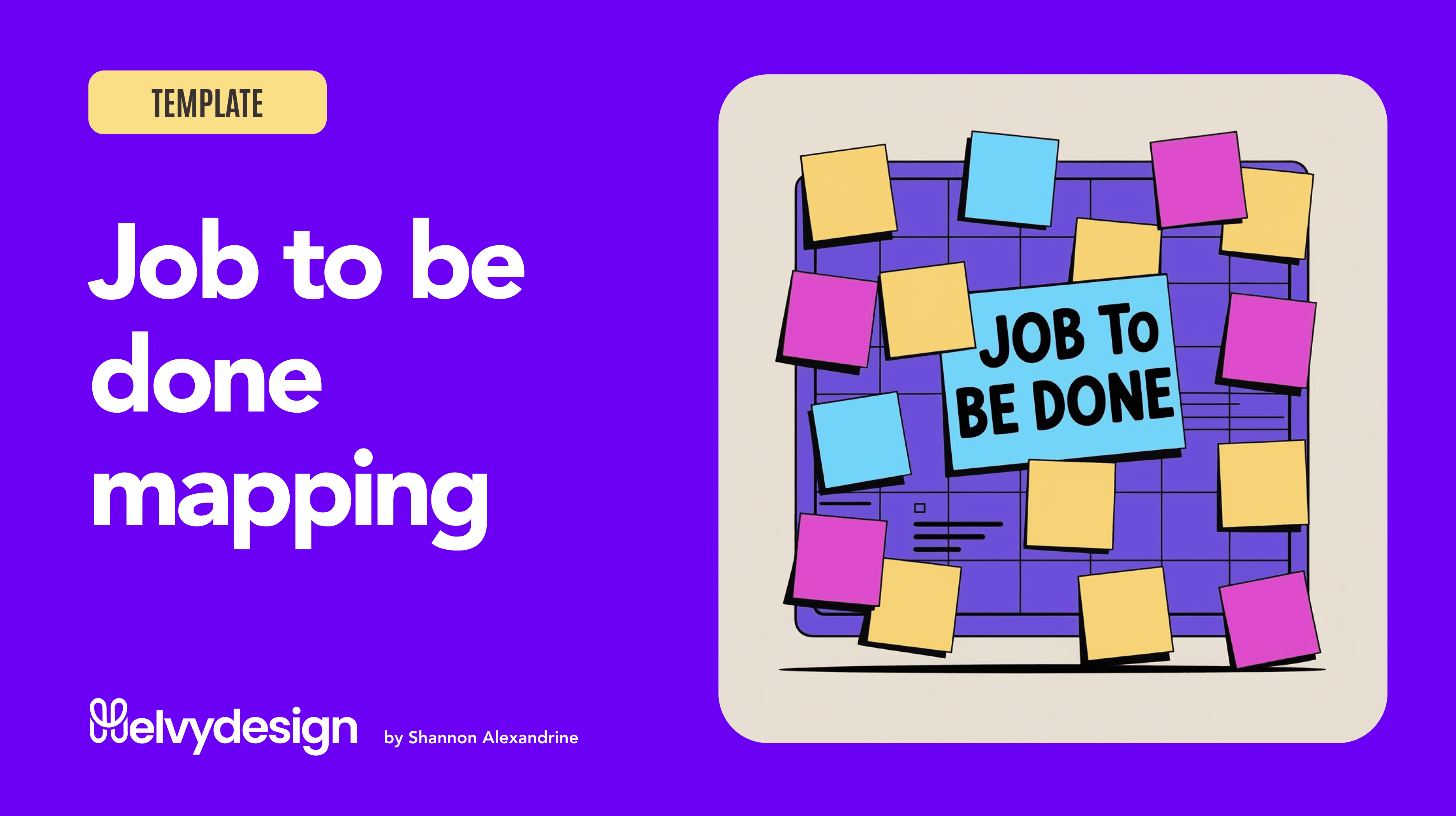
Formalized discovery practices through structured templates, you can find in Figma Community my Job to be done mapping Figjam, and UX Decision matrix
Introduced persona and archetype frameworks
Facilitated dedicated migration workshops
Standardized cross-functional rituals
Improved handover clarity and decision transparency
This increased delivery predictability and strengthened cross-team collaboration.
I share more about this approach in my article:
How to streamline the design process 📖


Embedding Continuous Improvement
Beyond delivery, I introduced a continuous improvement approach inspired by Lean principles within the People Mobility business line.
To structure feedback loops and elevate design maturity, I:
Implemented a dedicated JIRA board to collect and prioritize feedback
Established recurring retrospectives,
Increased visibility of user feedback across teams
The objective was to progressively shift from reactive execution to operational excellence.
Strengthening Design Culture
To reinforce collective maturity, we initiated, and I frequently facilitated a Design Community of Practice, creating a structured space for shared learning, alignment, and quality elevation.
In parallel, I mentored junior designers, supporting their growth and ensuring consistency during a period of transformation.
In 2024, I initiated the “Design Retro” initiative, an annual reflection process designed to assess practices, resolve structural issues, and define clear improvement actions for the following year. You can find my FigJam template -> Emmotional Retro - Inspired by Inside Out
Introducing ResearchOps Foundations
To stabilize decision-making and reduce fragmented insights, I structured foundational ResearchOps practices:
Organized user recruitment processes
Standardized research documentation
Evaluated and explored dedicated tools (e.g., Dovetail, Usedge)
Improved insight accessibility across teams via Slack and Confluence
This reinforced evidence-based product decisions and reduced reliance on ad hoc research.
Outcomes
Business Impact
Enterprise platform migration delivered in 9 months
4 companies onboarded in People Mobility
SCALAR selected as reference solution for the ULTIMO project
Organizational Impact
ResearchOps and DesignOps foundations established
Design maturity evolved from level 2 to level 4
Design embedded as a strategic partner in product decisions
Increased ownership clarity and cross-functional alignment
Read my article about how the Research Ops initiative started 📖
Discover more People Mobility in ZF ↗️
What my colleagues said about our collaboration
Shannon, in the past year, your year of integrating the Bestmile product into SCALAR in terms of design and narrative and as the only designer of the people mobility product suite, you have many different questions directed your way. I have leaned on you and your documentation in topics such as defining the product designer role and defining how the designer community can meet and give each other feedback and consequently grow together. You became an active reviewer and contributor of the design system. For the other designers in SCALAR you have become an experienced and professional source for peer reviews and new design methods and tools.

Alessa Enright
Head of design at ZF
Shannon is a talented, motivated, and strategic Product Designer who has made a lasting impact on our organization. During this time, she has consistently demonstrated exceptional expertise, leadership, and passion for user-centric design.

Frédéric Gaiddon
Head of People Mobility SaaS Products at ZF
Blog
More Projects
Lead design
ZF SCALAR - SAAS Mobility Platform Transformation
Design leadership for SCALAR’s transition from startup to enterprise mobility platform post-Bestmile acquisition.
Year :
2021 -2026
Industry :
Transport
Client :
ZF
Project Duration :
5 ans

Context
ZF is a leader in transmission, chassis, and active/passive safety technologies for the automotive and industrial sectors. With approximately 161,600 employees, 161 production sites in 30 countries, and sales exceeding €40 billion, the group (majority-owned by the Zeppelin Foundation) is a major supplier of sustainable mobility solutions.
SCALAR from ZF is an AI-powered, digital Fleet Orchestration Platform (FOP) designed to optimize commercial cargo and passenger transport in real-time. It uses advanced algorithms and self-learning technology to automate planning, routing, and dispatching, improving efficiency for mixed fleets.
Within ZF’s ecosystem, ZF SCALAR People Mobility acts as the software layer connecting operators, drivers, travelers, and vehicles, enabling real-time dispatching, routing, ride pooling, and fleet optimization.

Internal challenge
As the design function evolved from external support to an internal team, and following company acquisition and team expansion, role clarity and alignment became critical.
Different working models coexisted, ownership boundaries were blurred, and the growing design team required structure to scale effectively.
My contribution as Lead UX & Product Designer
At ZF, I acted as a bridge between startup agility and enterprise-level requirements, supporting the evolution of the design function during a period of organizational growth, team expansion, and product transformation.
In close partnership with the Head of Design and cross-functional stakeholders across Product, Engineering, and Business, I translated strategic objectives into scalable user experiences while progressively structuring the design organization itself.
Structuring Roles & Governance
As the design team transitioned from external support to a more internalized and expanding structure, including new hires and post-acquisition alignment, role clarity became critical.
Together with the Head of Design, we:
Clarified responsibilities across designers
Defined collaboration models between Product, Design, and Engineering
Reduced role ambiguity across teams
This created stronger alignment and reduced delivery friction.
Building a Scalable Product Design Process
To support the technical migration and increasing product complexity within the People Mobility business line, I structured a clearer end-to-end workflow:
Formalized discovery practices through structured templates, you can find in Figma Community my Job to be done mapping Figjam, and UX Decision matrix
Introduced persona and archetype frameworks
Facilitated dedicated migration workshops
Standardized cross-functional rituals
Improved handover clarity and decision transparency
This increased delivery predictability and strengthened cross-team collaboration.
I share more about this approach in my article:
How to streamline the design process 📖


Embedding Continuous Improvement
Beyond delivery, I introduced a continuous improvement approach inspired by Lean principles within the People Mobility business line.
To structure feedback loops and elevate design maturity, I:
Implemented a dedicated JIRA board to collect and prioritize feedback
Established recurring retrospectives,
Increased visibility of user feedback across teams
The objective was to progressively shift from reactive execution to operational excellence.
Strengthening Design Culture
To reinforce collective maturity, we initiated, and I frequently facilitated a Design Community of Practice, creating a structured space for shared learning, alignment, and quality elevation.
In parallel, I mentored junior designers, supporting their growth and ensuring consistency during a period of transformation.
In 2024, I initiated the “Design Retro” initiative, an annual reflection process designed to assess practices, resolve structural issues, and define clear improvement actions for the following year. You can find my FigJam template -> Emmotional Retro - Inspired by Inside Out
Introducing ResearchOps Foundations
To stabilize decision-making and reduce fragmented insights, I structured foundational ResearchOps practices:
Organized user recruitment processes
Standardized research documentation
Evaluated and explored dedicated tools (e.g., Dovetail, Usedge)
Improved insight accessibility across teams via Slack and Confluence
This reinforced evidence-based product decisions and reduced reliance on ad hoc research.
Outcomes
Business Impact
Enterprise platform migration delivered in 9 months
4 companies onboarded in People Mobility
SCALAR selected as reference solution for the ULTIMO project
Organizational Impact
ResearchOps and DesignOps foundations established
Design maturity evolved from level 2 to level 4
Design embedded as a strategic partner in product decisions
Increased ownership clarity and cross-functional alignment
Read my article about how the Research Ops initiative started 📖
Discover more People Mobility in ZF ↗️
What my colleagues said about our collaboration
Shannon, in the past year, your year of integrating the Bestmile product into SCALAR in terms of design and narrative and as the only designer of the people mobility product suite, you have many different questions directed your way. I have leaned on you and your documentation in topics such as defining the product designer role and defining how the designer community can meet and give each other feedback and consequently grow together. You became an active reviewer and contributor of the design system. For the other designers in SCALAR you have become an experienced and professional source for peer reviews and new design methods and tools.

Alessa Enright
Head of design at ZF
Shannon is a talented, motivated, and strategic Product Designer who has made a lasting impact on our organization. During this time, she has consistently demonstrated exceptional expertise, leadership, and passion for user-centric design.

Frédéric Gaiddon
Head of People Mobility SaaS Products at ZF
Blog
More Projects
Lead design
ZF SCALAR - SAAS Mobility Platform Transformation
Design leadership for SCALAR’s transition from startup to enterprise mobility platform post-Bestmile acquisition.
Year :
2021 -2026
Industry :
Transport
Client :
ZF
Project Duration :
5 ans

Context
ZF is a leader in transmission, chassis, and active/passive safety technologies for the automotive and industrial sectors. With approximately 161,600 employees, 161 production sites in 30 countries, and sales exceeding €40 billion, the group (majority-owned by the Zeppelin Foundation) is a major supplier of sustainable mobility solutions.
SCALAR from ZF is an AI-powered, digital Fleet Orchestration Platform (FOP) designed to optimize commercial cargo and passenger transport in real-time. It uses advanced algorithms and self-learning technology to automate planning, routing, and dispatching, improving efficiency for mixed fleets.
Within ZF’s ecosystem, ZF SCALAR People Mobility acts as the software layer connecting operators, drivers, travelers, and vehicles, enabling real-time dispatching, routing, ride pooling, and fleet optimization.

Internal challenge
As the design function evolved from external support to an internal team, and following company acquisition and team expansion, role clarity and alignment became critical.
Different working models coexisted, ownership boundaries were blurred, and the growing design team required structure to scale effectively.
My contribution as Lead UX & Product Designer
At ZF, I acted as a bridge between startup agility and enterprise-level requirements, supporting the evolution of the design function during a period of organizational growth, team expansion, and product transformation.
In close partnership with the Head of Design and cross-functional stakeholders across Product, Engineering, and Business, I translated strategic objectives into scalable user experiences while progressively structuring the design organization itself.
Structuring Roles & Governance
As the design team transitioned from external support to a more internalized and expanding structure, including new hires and post-acquisition alignment, role clarity became critical.
Together with the Head of Design, we:
Clarified responsibilities across designers
Defined collaboration models between Product, Design, and Engineering
Reduced role ambiguity across teams
This created stronger alignment and reduced delivery friction.
Building a Scalable Product Design Process
To support the technical migration and increasing product complexity within the People Mobility business line, I structured a clearer end-to-end workflow:
Formalized discovery practices through structured templates, you can find in Figma Community my Job to be done mapping Figjam, and UX Decision matrix
Introduced persona and archetype frameworks
Facilitated dedicated migration workshops
Standardized cross-functional rituals
Improved handover clarity and decision transparency
This increased delivery predictability and strengthened cross-team collaboration.
I share more about this approach in my article:
How to streamline the design process 📖


Embedding Continuous Improvement
Beyond delivery, I introduced a continuous improvement approach inspired by Lean principles within the People Mobility business line.
To structure feedback loops and elevate design maturity, I:
Implemented a dedicated JIRA board to collect and prioritize feedback
Established recurring retrospectives,
Increased visibility of user feedback across teams
The objective was to progressively shift from reactive execution to operational excellence.
Strengthening Design Culture
To reinforce collective maturity, we initiated, and I frequently facilitated a Design Community of Practice, creating a structured space for shared learning, alignment, and quality elevation.
In parallel, I mentored junior designers, supporting their growth and ensuring consistency during a period of transformation.
In 2024, I initiated the “Design Retro” initiative, an annual reflection process designed to assess practices, resolve structural issues, and define clear improvement actions for the following year. You can find my FigJam template -> Emmotional Retro - Inspired by Inside Out
Introducing ResearchOps Foundations
To stabilize decision-making and reduce fragmented insights, I structured foundational ResearchOps practices:
Organized user recruitment processes
Standardized research documentation
Evaluated and explored dedicated tools (e.g., Dovetail, Usedge)
Improved insight accessibility across teams via Slack and Confluence
This reinforced evidence-based product decisions and reduced reliance on ad hoc research.
Outcomes
Business Impact
Enterprise platform migration delivered in 9 months
4 companies onboarded in People Mobility
SCALAR selected as reference solution for the ULTIMO project
Organizational Impact
ResearchOps and DesignOps foundations established
Design maturity evolved from level 2 to level 4
Design embedded as a strategic partner in product decisions
Increased ownership clarity and cross-functional alignment
Read my article about how the Research Ops initiative started 📖
Discover more People Mobility in ZF ↗️
What my colleagues said about our collaboration
Shannon, in the past year, your year of integrating the Bestmile product into SCALAR in terms of design and narrative and as the only designer of the people mobility product suite, you have many different questions directed your way. I have leaned on you and your documentation in topics such as defining the product designer role and defining how the designer community can meet and give each other feedback and consequently grow together. You became an active reviewer and contributor of the design system. For the other designers in SCALAR you have become an experienced and professional source for peer reviews and new design methods and tools.

Alessa Enright
Head of design at ZF
Shannon is a talented, motivated, and strategic Product Designer who has made a lasting impact on our organization. During this time, she has consistently demonstrated exceptional expertise, leadership, and passion for user-centric design.

Frédéric Gaiddon
Head of People Mobility SaaS Products at ZF