Job To Be Done Mapping: A User-Centric Framework for Product Discovery
Job to Be Done (JTBD) Mapping is a framework used to understand customer needs by focusing on the tasks they are trying to accomplish.
Resources
Mar 13, 2026
Introduction to Job to Be Done Mapping
Job To Be Done (JTBD) Mapping helps product teams and designers identify the real problems users face, leading to more effective and customer-centric solutions.
JTBD Mapping focuses on understanding the underlying reasons why customers use a product or service. Instead of looking at customer needs through demographics or product features, JTBD examines the functional, emotional, and social jobs customers are trying to complete.
By understanding these motivations, teams can design solutions that better support users in achieving their goals.
How to Use JTBD Mapping
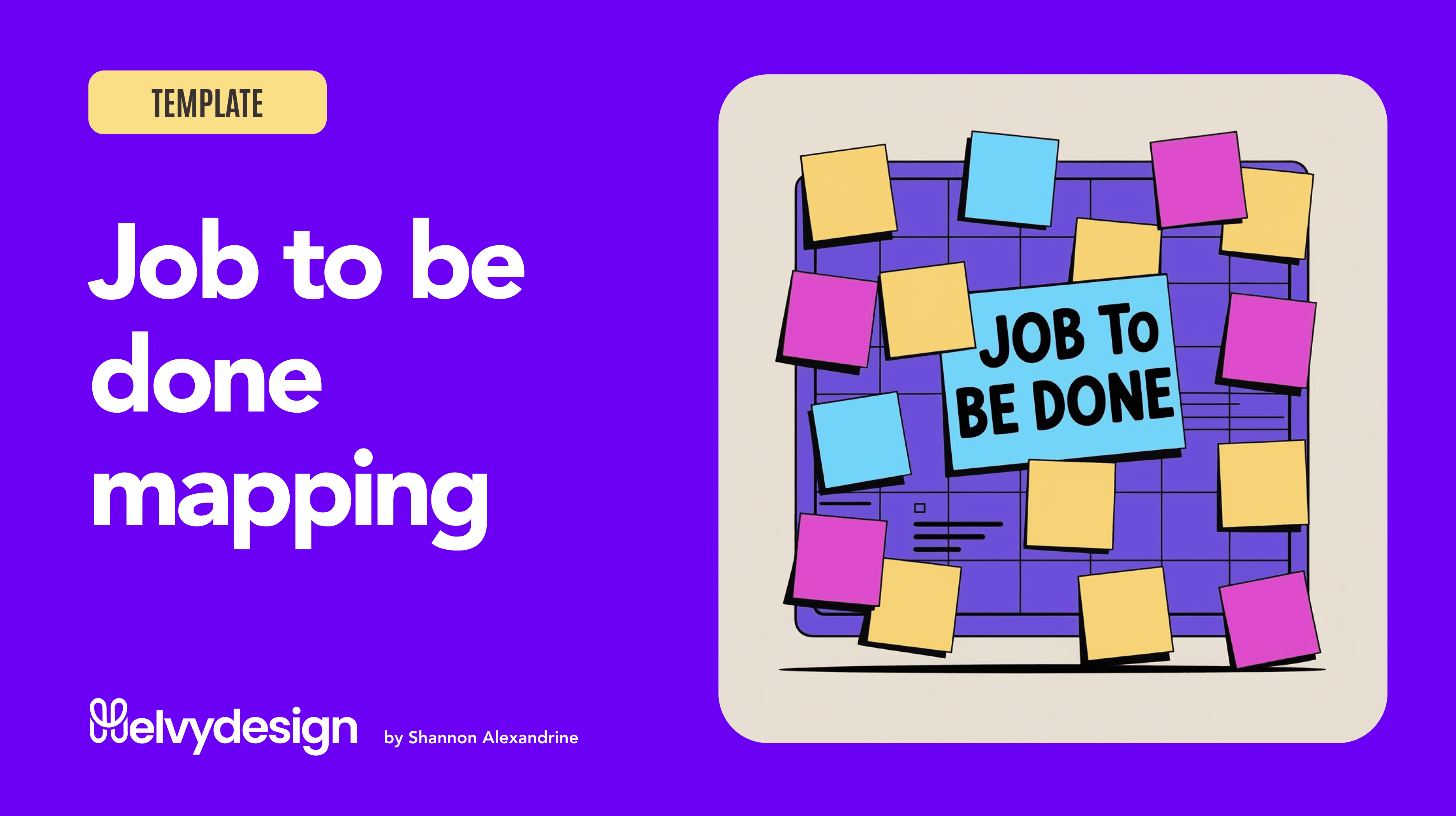
You can find a template I created in FigJam
Here are the main steps to run a Job To Be Done Mapping workshop:
Identify the Job
Start by identifying the primary job your customer is trying to accomplish. This means understanding the core task or goal they want to achieve.
Define the Context
Understand the situation in which the job occurs. This includes the environment, triggers, and circumstances surrounding the task.
Uncover Desired Outcomes
Determine what success looks like from the customer's perspective. These outcomes may be functional, emotional, or social.
Map the Job
Create a visual map of the job by breaking it down into stages. Identify the key steps users go through and the friction points they encounter.
Analyze Pain Points
Highlight where customers experience difficulties or frustrations. These areas often reveal opportunities for improvement.
Ideate Solutions
Use the insights gathered to generate ideas that help users complete their jobs more efficiently or with a better experience.
A well-known real-world example is the McDonald’s milkshake case study, where researchers discovered that many customers were “hiring” milkshakes in the morning to make their commute more enjoyable.Here’s a real life example: What McDonalds found out when investigating why customers “hire” a milkshake in the morning.

When to Use JTBD Mapping in the Design Process
Problem Definition Phase
JTBD Mapping is particularly useful when defining a problem statement. It helps ensure the team is focused on solving the right problem.
Ideation Phase
It can guide brainstorming sessions by framing solutions around real customer needs and motivations.
Early Stages of Product Design
JTBD Mapping works best at the beginning of the design process to gain a deeper understanding of user context and behaviors.
Validation Phase
Insights from JTBD can also help validate whether your solutions truly address the identified user needs.
Pros and Cons of Job to Be Done Mapping
🥰 Advantage
Customer-centric approach
Helps teams understand the true motivations behind user behavior, leading to more relevant solutions.
Improves clarity
Clarifies the outcomes users expect, reducing the risk of building unnecessary features.
Supports prioritization
Provides a clear framework for prioritizing product decisions based on real pain points.
Encourages innovation
By focusing on the job rather than the product, teams can explore new ways of solving problems.
😖 Inconvenient
Time-consuming
Running a proper JTBD workshop and gathering insights can take time. A dedicated workshop of at least 1–2 hours is recommended.
Requires user research
JTBD works best when supported by interviews and real user insights.
Analysis complexity
Synthesizing research data into a clear job map requires experience in research and product thinking.
Risk of incomplete insights
If the research is too shallow, external factors such as market context or competition may be overlooked.
Can be counterproductive without research
Running a JTBD exercise without a solid understanding of users, personas, or their environment may lead to misleading conclusions.

Conclusion
Job To Be Done Mapping is a powerful framework for product teams and designers who want to build truly customer-centric solutions. By focusing on the jobs users are trying to accomplish, teams can uncover deeper insights and design more meaningful products.
Although it requires research and structured thinking, JTBD Mapping often leads to clearer product decisions and more impactful user experiences.
Source and Inspiration:
https://jobs-to-be-done.com/mapping-the-job-to-be-done-45336427b3bc
⬇️⬇️⬇️
The figjam template to help you in your next Workshop
More to Discover

Job To Be Done Mapping: A User-Centric Framework for Product Discovery
Job to Be Done (JTBD) Mapping is a framework used to understand customer needs by focusing on the tasks they are trying to accomplish.
Resources
Mar 13, 2026
Introduction to Job to Be Done Mapping
Job To Be Done (JTBD) Mapping helps product teams and designers identify the real problems users face, leading to more effective and customer-centric solutions.
JTBD Mapping focuses on understanding the underlying reasons why customers use a product or service. Instead of looking at customer needs through demographics or product features, JTBD examines the functional, emotional, and social jobs customers are trying to complete.
By understanding these motivations, teams can design solutions that better support users in achieving their goals.
How to Use JTBD Mapping
You can find a template I created in FigJam
Here are the main steps to run a Job To Be Done Mapping workshop:
Identify the Job
Start by identifying the primary job your customer is trying to accomplish. This means understanding the core task or goal they want to achieve.
Define the Context
Understand the situation in which the job occurs. This includes the environment, triggers, and circumstances surrounding the task.
Uncover Desired Outcomes
Determine what success looks like from the customer's perspective. These outcomes may be functional, emotional, or social.
Map the Job
Create a visual map of the job by breaking it down into stages. Identify the key steps users go through and the friction points they encounter.
Analyze Pain Points
Highlight where customers experience difficulties or frustrations. These areas often reveal opportunities for improvement.
Ideate Solutions
Use the insights gathered to generate ideas that help users complete their jobs more efficiently or with a better experience.
A well-known real-world example is the McDonald’s milkshake case study, where researchers discovered that many customers were “hiring” milkshakes in the morning to make their commute more enjoyable.Here’s a real life example: What McDonalds found out when investigating why customers “hire” a milkshake in the morning.
When to Use JTBD Mapping in the Design Process
Problem Definition Phase
JTBD Mapping is particularly useful when defining a problem statement. It helps ensure the team is focused on solving the right problem.
Ideation Phase
It can guide brainstorming sessions by framing solutions around real customer needs and motivations.
Early Stages of Product Design
JTBD Mapping works best at the beginning of the design process to gain a deeper understanding of user context and behaviors.
Validation Phase
Insights from JTBD can also help validate whether your solutions truly address the identified user needs.
Pros and Cons of Job to Be Done Mapping
🥰 Advantage
Customer-centric approach
Helps teams understand the true motivations behind user behavior, leading to more relevant solutions.
Improves clarity
Clarifies the outcomes users expect, reducing the risk of building unnecessary features.
Supports prioritization
Provides a clear framework for prioritizing product decisions based on real pain points.
Encourages innovation
By focusing on the job rather than the product, teams can explore new ways of solving problems.
😖 Inconvenient
Time-consuming
Running a proper JTBD workshop and gathering insights can take time. A dedicated workshop of at least 1–2 hours is recommended.
Requires user research
JTBD works best when supported by interviews and real user insights.
Analysis complexity
Synthesizing research data into a clear job map requires experience in research and product thinking.
Risk of incomplete insights
If the research is too shallow, external factors such as market context or competition may be overlooked.
Can be counterproductive without research
Running a JTBD exercise without a solid understanding of users, personas, or their environment may lead to misleading conclusions.
Conclusion
Job To Be Done Mapping is a powerful framework for product teams and designers who want to build truly customer-centric solutions. By focusing on the jobs users are trying to accomplish, teams can uncover deeper insights and design more meaningful products.
Although it requires research and structured thinking, JTBD Mapping often leads to clearer product decisions and more impactful user experiences.
Source and Inspiration:
https://jobs-to-be-done.com/mapping-the-job-to-be-done-45336427b3bc
⬇️⬇️⬇️
The figjam template to help you in your next Workshop
More to Discover
Job To Be Done Mapping: A User-Centric Framework for Product Discovery
Job to Be Done (JTBD) Mapping is a framework used to understand customer needs by focusing on the tasks they are trying to accomplish.
Resources
Mar 13, 2026
Introduction to Job to Be Done Mapping
Job To Be Done (JTBD) Mapping helps product teams and designers identify the real problems users face, leading to more effective and customer-centric solutions.
JTBD Mapping focuses on understanding the underlying reasons why customers use a product or service. Instead of looking at customer needs through demographics or product features, JTBD examines the functional, emotional, and social jobs customers are trying to complete.
By understanding these motivations, teams can design solutions that better support users in achieving their goals.
How to Use JTBD Mapping
You can find a template I created in FigJam
Here are the main steps to run a Job To Be Done Mapping workshop:
Identify the Job
Start by identifying the primary job your customer is trying to accomplish. This means understanding the core task or goal they want to achieve.
Define the Context
Understand the situation in which the job occurs. This includes the environment, triggers, and circumstances surrounding the task.
Uncover Desired Outcomes
Determine what success looks like from the customer's perspective. These outcomes may be functional, emotional, or social.
Map the Job
Create a visual map of the job by breaking it down into stages. Identify the key steps users go through and the friction points they encounter.
Analyze Pain Points
Highlight where customers experience difficulties or frustrations. These areas often reveal opportunities for improvement.
Ideate Solutions
Use the insights gathered to generate ideas that help users complete their jobs more efficiently or with a better experience.
A well-known real-world example is the McDonald’s milkshake case study, where researchers discovered that many customers were “hiring” milkshakes in the morning to make their commute more enjoyable.Here’s a real life example: What McDonalds found out when investigating why customers “hire” a milkshake in the morning.
When to Use JTBD Mapping in the Design Process
Problem Definition Phase
JTBD Mapping is particularly useful when defining a problem statement. It helps ensure the team is focused on solving the right problem.
Ideation Phase
It can guide brainstorming sessions by framing solutions around real customer needs and motivations.
Early Stages of Product Design
JTBD Mapping works best at the beginning of the design process to gain a deeper understanding of user context and behaviors.
Validation Phase
Insights from JTBD can also help validate whether your solutions truly address the identified user needs.
Pros and Cons of Job to Be Done Mapping
🥰 Advantage
Customer-centric approach
Helps teams understand the true motivations behind user behavior, leading to more relevant solutions.
Improves clarity
Clarifies the outcomes users expect, reducing the risk of building unnecessary features.
Supports prioritization
Provides a clear framework for prioritizing product decisions based on real pain points.
Encourages innovation
By focusing on the job rather than the product, teams can explore new ways of solving problems.
😖 Inconvenient
Time-consuming
Running a proper JTBD workshop and gathering insights can take time. A dedicated workshop of at least 1–2 hours is recommended.
Requires user research
JTBD works best when supported by interviews and real user insights.
Analysis complexity
Synthesizing research data into a clear job map requires experience in research and product thinking.
Risk of incomplete insights
If the research is too shallow, external factors such as market context or competition may be overlooked.
Can be counterproductive without research
Running a JTBD exercise without a solid understanding of users, personas, or their environment may lead to misleading conclusions.
Conclusion
Job To Be Done Mapping is a powerful framework for product teams and designers who want to build truly customer-centric solutions. By focusing on the jobs users are trying to accomplish, teams can uncover deeper insights and design more meaningful products.
Although it requires research and structured thinking, JTBD Mapping often leads to clearer product decisions and more impactful user experiences.
Source and Inspiration:
https://jobs-to-be-done.com/mapping-the-job-to-be-done-45336427b3bc
⬇️⬇️⬇️
The figjam template to help you in your next Workshop