AI & Product Design Process: Rethinking Our Role and Systems in the Age of AI
Rethinking product design in the age of AI, from speed and generation to structure, control, and long-term product quality.
Insights
Mar 20, 2026
Introduction
Artificial intelligence is no longer just transforming the tools we use.
It is fundamentally reshaping how products are imagined, designed, built, measured, and improved.
In just a few months, tools like Claude, GitHub Copilot, or Loveable have accelerated entire parts of the product design process.
What used to take days, sometimes weeks, can now be produced in minutes:
interfaces
user flows
research synthesis
early technical implementations
But this acceleration raises a fundamental question:
Are we improving product quality… or simply accelerating production?
Because behind speed lies a critical challenge:
our ability to control and structure the systems we build.
Based on current evolutions and field observations, this article explores emerging patterns, not certainties.
We are not designing interfaces anymore. We are designing systems.
Speed vs Control: Producing is not Building
With AI, producing has become easy.
But producing ≠ building.
Today’s tools are optimized for:
speed
generation
plausibility
This creates products that work… but don’t always hold over time. We are already seeing:
locally coherent experiences but globally fragile systems
fast decisions with little structure
an illusion of quality driven by speed
Key insight:
Without structure, AI produces.
With structure, it builds.
Design in the age of AI: Between acceleration and dilution
Design is undergoing a similar transformation to what engineering has experienced.
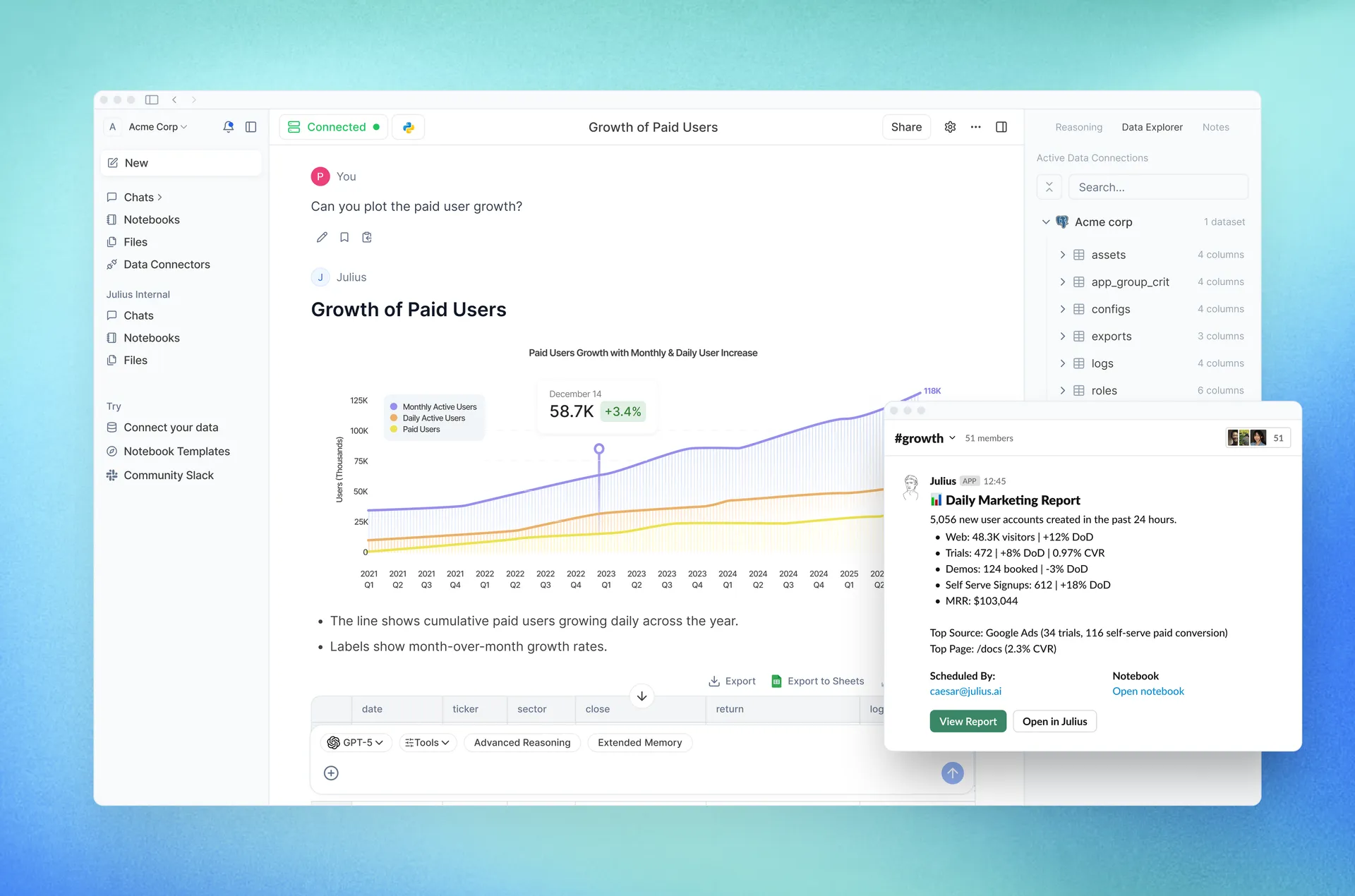
With tools like Figma AI, Pencil.dev or UXPilot, it is now possible to:
generate full interfaces
structure user flows
explore multiple directions instantly
This is powerful. But it introduces a major risk:
👉 confusing production with design.
Producing screens does not mean designing experiences.
Without a clear framework:
Product vision weakens
decisions become opportunistic
global consistency degrades
Like code generated without architecture.
The Product Design Process is intensifying
The product design process has never truly been linear.
Agile and continuous improvement already introduced iterative loops driven by data and feedback.
What AI changes is:
speed
scale
complexity
Today:
cycles are shorter
Iterations are more frequent
decisions multiply
dependencies increase
The product becomes a continuously evolving system.
🔁 An amplified Product Loop: from Discovery to Iteration
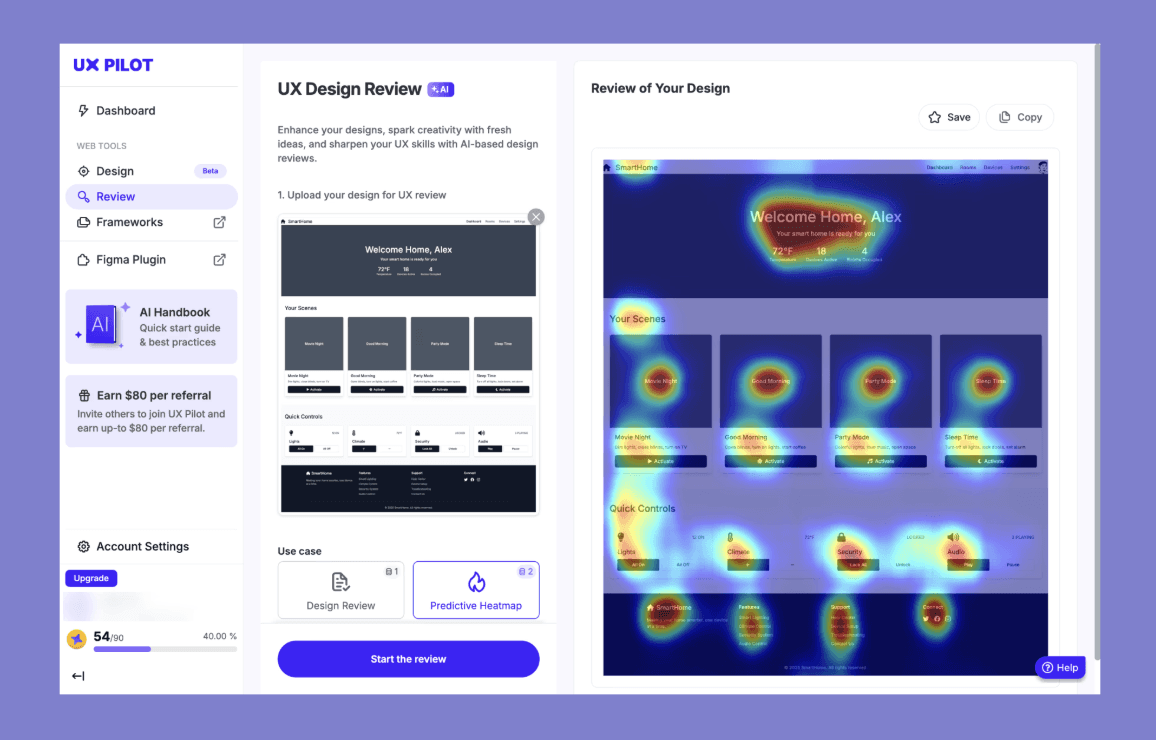
With tools like Dovetail, Julius, or Usedge:
interview synthesis
data analysis
pattern detection
Some tools also help: prioritize insights and guide product decisions. But AI can create an illusion of understanding.
It:
synthesizes
simplifies
structures
but can also:
smooth weak signals
hide contradictions
reduce human complexity
The designer’s role evolves:
→ interpret
→ challenge
→ contextualize
Define → Framing
AI helps structured thinking.
But it does not decide what matters.
What is strategic, what creates value, what should be built, for the moment, these decisions remain deeply human.
Ideation → Exploring
AI increases creativity in volume. But direction, intention, and vision still come from humans. The designer becomes a curator of possibilities and a decision-maker.
Design → Building
AI can generate interfaces. But a consistent UI does not guarantee a meaningful experience.
The designer remains responsible for coherence, quality, and differentiation.
Delivery → Shipping
AI accelerates development. But speed creates an illusion of completeness.
A feature can be shipped and still be:
poorly tracked
fragile
insecure
AI accelerates production, not robustness.
Track → Measuring (AI & Product Governance)
We track products. But we rarely track AI itself.
This is becoming critical.
We now need to measure:
AI usage across the product and teams
Its impact on production and iteration speed
the quality of the generated outputs
user trust and understanding
risks, data exposure, and compliance (including GDPR)
👉 Key insight:
What is not measured with AI quickly becomes uncontrollable. The designer’s role expands toward transparency, quality, and system understanding.
Learn → Improving
The product becomes a living system, continuously evolving through feedback and iteration.
What actually changes with AI
AI introduces:
exponential speed
massive iteration capacity
increased complexity
amplified risks
Which makes one thing clear:
Structure is no longer optional. It is essential.
The role of Designers is evolving
Design is no longer limited to interfaces.
Designers become:
system thinkers
orchestrators of product loops
guardians of long-term coherence
bridges between humans and AI
The shift is clear: from execution → to leadership
AI Responsibility & Design
AI integration is not only a technical challenge.
It requires systems that are:
understandable
traceable
controllable
But also:
auditable over time
transparent in how decisions are made
resilient to errors and misuse
In a European context, this also means:
respecting data privacy
ensuring GDPR compliance
making automated decisions interpretable
This is not just about compliance. It is about building trust with users, teams, and organizations.
Design plays a critical role here. Not only in shaping interfaces, but in making complex systems legible, exposing uncertainty, and clarifying where human judgment still matters.
👉 Good design does not hide AI.
It frames it, explains it, and sets the right expectations.
Because in the end, a system that cannot be understood
cannot be trusted, and a system that cannot be trusted
will not last.
From Questions to Action
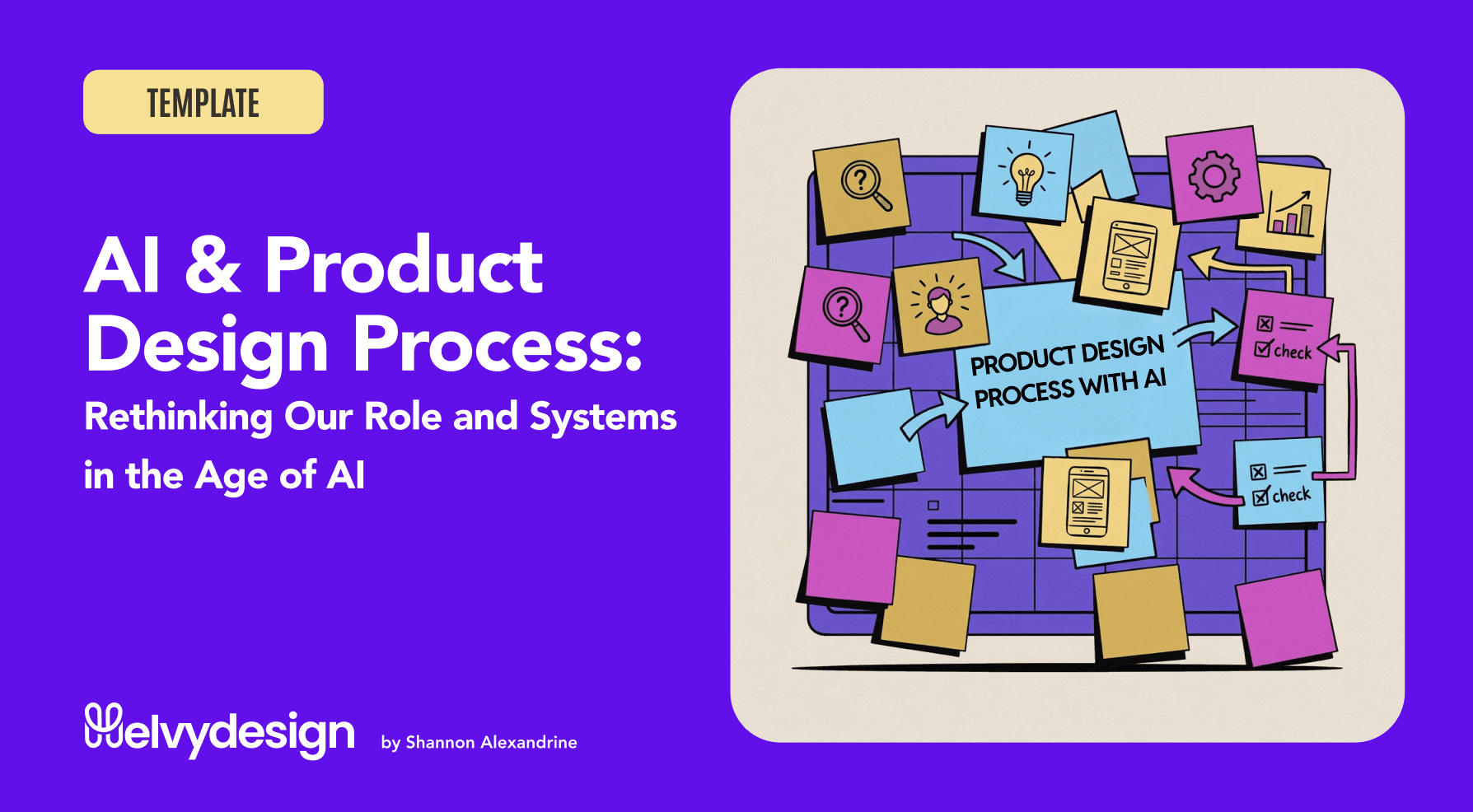
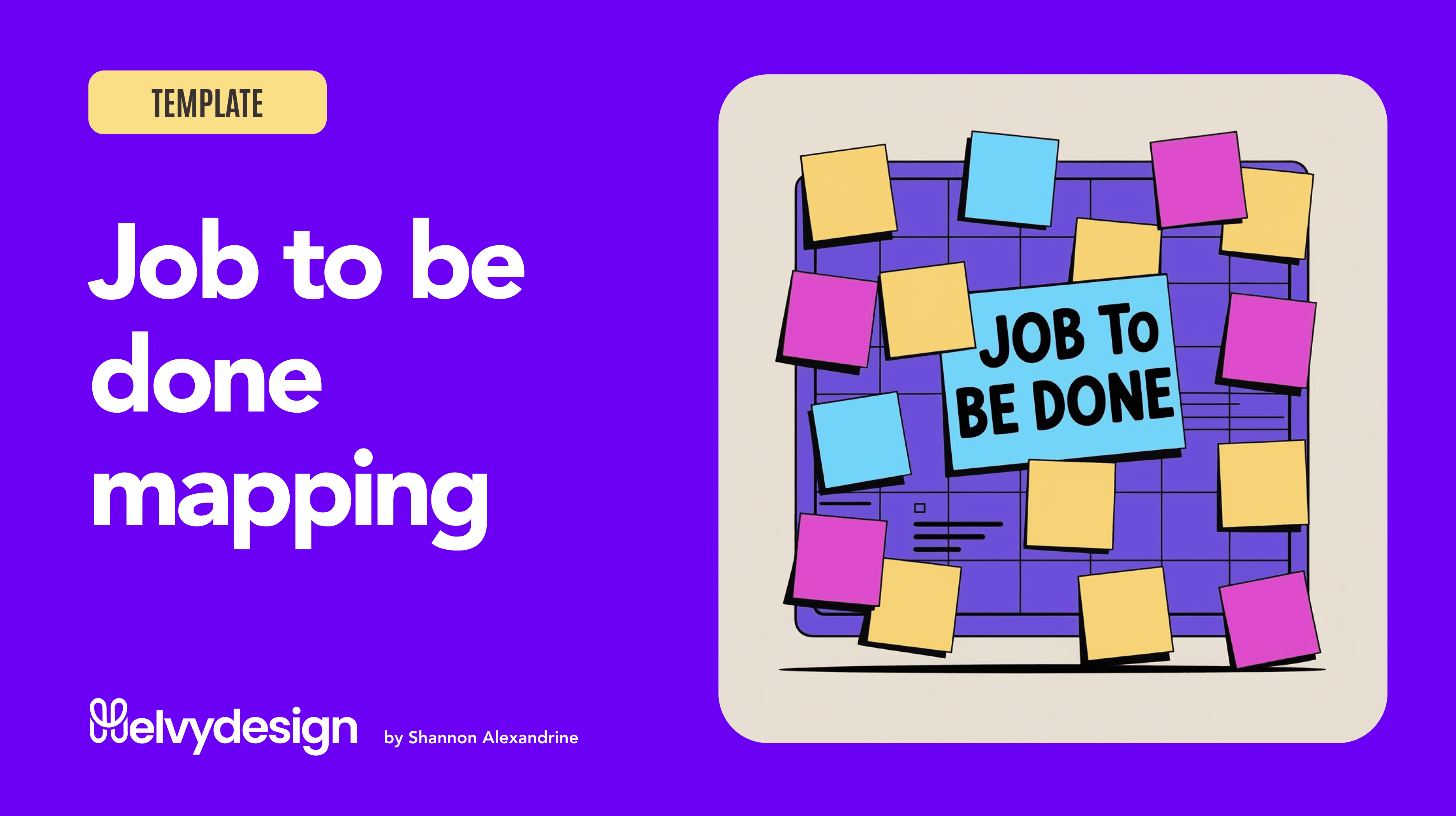
To help teams move from reflection to action, I designed a practical template to support more structured conversations around AI in product design.
It helps clarify the respective roles of humans and AI, identify risks earlier, and turn open questions into concrete decisions across the product lifecycle.
Resource
Conclusion
AI is not just accelerating how we build products. It is changing what it means to design them. For the first time, we are not only shaping interfaces or experiences, but systems that can generate, decide, and evolve with increasing autonomy.
This shift creates a new kind of responsibility. Not everything that can be generated should be shipped. Not everything that works should automatically be trusted.
Speed alone is no longer a competitive advantage. Clarity, structure, and control are.
The teams that will stand out are not the ones producing the most, but the ones capable of understanding, framing, and mastering complexity over time.
In that context, design becomes even more critical.
Not as a layer of execution, but as a discipline that brings intention, structure, and meaning into increasingly automated systems.
The question is no longer whether AI will change design.
It already has. The real question is: who will be able to lead it?
🤝 Work with me
I help product teams move from AI experimentation to structured, scalable systems.
I support organizations in integrating AI into their design and product workflows while ensuring clarity, governance, long-term quality, and responsible usage.
Further reading
These resources provide useful perspectives on how AI is reshaping workflows while reinforcing the importance of structure, intent, and design judgment.
More to Discover
AI & Product Design Process: Rethinking Our Role and Systems in the Age of AI
Rethinking product design in the age of AI, from speed and generation to structure, control, and long-term product quality.
Insights
Mar 20, 2026
Introduction
Artificial intelligence is no longer just transforming the tools we use.
It is fundamentally reshaping how products are imagined, designed, built, measured, and improved.
In just a few months, tools like Claude, GitHub Copilot, or Loveable have accelerated entire parts of the product design process.
What used to take days, sometimes weeks, can now be produced in minutes:
interfaces
user flows
research synthesis
early technical implementations
But this acceleration raises a fundamental question:
Are we improving product quality… or simply accelerating production?
Because behind speed lies a critical challenge:
our ability to control and structure the systems we build.
Based on current evolutions and field observations, this article explores emerging patterns, not certainties.
We are not designing interfaces anymore. We are designing systems.
Speed vs Control: Producing is not Building
With AI, producing has become easy.
But producing ≠ building.
Today’s tools are optimized for:
speed
generation
plausibility
This creates products that work… but don’t always hold over time. We are already seeing:
locally coherent experiences but globally fragile systems
fast decisions with little structure
an illusion of quality driven by speed
Key insight:
Without structure, AI produces.
With structure, it builds.
Design in the age of AI: Between acceleration and dilution
Design is undergoing a similar transformation to what engineering has experienced.
With tools like Figma AI, Pencil.dev or UXPilot, it is now possible to:
generate full interfaces
structure user flows
explore multiple directions instantly
This is powerful. But it introduces a major risk:
👉 confusing production with design.
Producing screens does not mean designing experiences.
Without a clear framework:
Product vision weakens
decisions become opportunistic
global consistency degrades
Like code generated without architecture.
The Product Design Process is intensifying
The product design process has never truly been linear.
Agile and continuous improvement already introduced iterative loops driven by data and feedback.
What AI changes is:
speed
scale
complexity
Today:
cycles are shorter
Iterations are more frequent
decisions multiply
dependencies increase
The product becomes a continuously evolving system.
🔁 An amplified Product Loop: from Discovery to Iteration
With tools like Dovetail, Julius, or Usedge:
interview synthesis
data analysis
pattern detection
Some tools also help: prioritize insights and guide product decisions. But AI can create an illusion of understanding.
It:
synthesizes
simplifies
structures
but can also:
smooth weak signals
hide contradictions
reduce human complexity
The designer’s role evolves:
→ interpret
→ challenge
→ contextualize
Define → Framing
AI helps structured thinking.
But it does not decide what matters.
What is strategic, what creates value, what should be built, for the moment, these decisions remain deeply human.
Ideation → Exploring
AI increases creativity in volume. But direction, intention, and vision still come from humans. The designer becomes a curator of possibilities and a decision-maker.
Design → Building
AI can generate interfaces. But a consistent UI does not guarantee a meaningful experience.
The designer remains responsible for coherence, quality, and differentiation.
Delivery → Shipping
AI accelerates development. But speed creates an illusion of completeness.
A feature can be shipped and still be:
poorly tracked
fragile
insecure
AI accelerates production, not robustness.
Track → Measuring (AI & Product Governance)
We track products. But we rarely track AI itself.
This is becoming critical.
We now need to measure:
AI usage across the product and teams
Its impact on production and iteration speed
the quality of the generated outputs
user trust and understanding
risks, data exposure, and compliance (including GDPR)
👉 Key insight:
What is not measured with AI quickly becomes uncontrollable. The designer’s role expands toward transparency, quality, and system understanding.
Learn → Improving
The product becomes a living system, continuously evolving through feedback and iteration.
What actually changes with AI
AI introduces:
exponential speed
massive iteration capacity
increased complexity
amplified risks
Which makes one thing clear:
Structure is no longer optional. It is essential.
The role of Designers is evolving
Design is no longer limited to interfaces.
Designers become:
system thinkers
orchestrators of product loops
guardians of long-term coherence
bridges between humans and AI
The shift is clear: from execution → to leadership
AI Responsibility & Design
AI integration is not only a technical challenge.
It requires systems that are:
understandable
traceable
controllable
But also:
auditable over time
transparent in how decisions are made
resilient to errors and misuse
In a European context, this also means:
respecting data privacy
ensuring GDPR compliance
making automated decisions interpretable
This is not just about compliance. It is about building trust with users, teams, and organizations.
Design plays a critical role here. Not only in shaping interfaces, but in making complex systems legible, exposing uncertainty, and clarifying where human judgment still matters.
👉 Good design does not hide AI.
It frames it, explains it, and sets the right expectations.
Because in the end, a system that cannot be understood
cannot be trusted, and a system that cannot be trusted
will not last.
From Questions to Action
To help teams move from reflection to action, I designed a practical template to support more structured conversations around AI in product design.
It helps clarify the respective roles of humans and AI, identify risks earlier, and turn open questions into concrete decisions across the product lifecycle.
Resource
Conclusion
AI is not just accelerating how we build products. It is changing what it means to design them. For the first time, we are not only shaping interfaces or experiences, but systems that can generate, decide, and evolve with increasing autonomy.
This shift creates a new kind of responsibility. Not everything that can be generated should be shipped. Not everything that works should automatically be trusted.
Speed alone is no longer a competitive advantage. Clarity, structure, and control are.
The teams that will stand out are not the ones producing the most, but the ones capable of understanding, framing, and mastering complexity over time.
In that context, design becomes even more critical.
Not as a layer of execution, but as a discipline that brings intention, structure, and meaning into increasingly automated systems.
The question is no longer whether AI will change design.
It already has. The real question is: who will be able to lead it?
🤝 Work with me
I help product teams move from AI experimentation to structured, scalable systems.
I support organizations in integrating AI into their design and product workflows while ensuring clarity, governance, long-term quality, and responsible usage.
Further reading
These resources provide useful perspectives on how AI is reshaping workflows while reinforcing the importance of structure, intent, and design judgment.
More to Discover
AI & Product Design Process: Rethinking Our Role and Systems in the Age of AI
Rethinking product design in the age of AI, from speed and generation to structure, control, and long-term product quality.
Insights
Mar 20, 2026
Introduction
Artificial intelligence is no longer just transforming the tools we use.
It is fundamentally reshaping how products are imagined, designed, built, measured, and improved.
In just a few months, tools like Claude, GitHub Copilot, or Loveable have accelerated entire parts of the product design process.
What used to take days, sometimes weeks, can now be produced in minutes:
interfaces
user flows
research synthesis
early technical implementations
But this acceleration raises a fundamental question:
Are we improving product quality… or simply accelerating production?
Because behind speed lies a critical challenge:
our ability to control and structure the systems we build.
Based on current evolutions and field observations, this article explores emerging patterns, not certainties.
We are not designing interfaces anymore. We are designing systems.
Speed vs Control: Producing is not Building
With AI, producing has become easy.
But producing ≠ building.
Today’s tools are optimized for:
speed
generation
plausibility
This creates products that work… but don’t always hold over time. We are already seeing:
locally coherent experiences but globally fragile systems
fast decisions with little structure
an illusion of quality driven by speed
Key insight:
Without structure, AI produces.
With structure, it builds.
Design in the age of AI: Between acceleration and dilution
Design is undergoing a similar transformation to what engineering has experienced.
With tools like Figma AI, Pencil.dev or UXPilot, it is now possible to:
generate full interfaces
structure user flows
explore multiple directions instantly
This is powerful. But it introduces a major risk:
👉 confusing production with design.
Producing screens does not mean designing experiences.
Without a clear framework:
Product vision weakens
decisions become opportunistic
global consistency degrades
Like code generated without architecture.
The Product Design Process is intensifying
The product design process has never truly been linear.
Agile and continuous improvement already introduced iterative loops driven by data and feedback.
What AI changes is:
speed
scale
complexity
Today:
cycles are shorter
Iterations are more frequent
decisions multiply
dependencies increase
The product becomes a continuously evolving system.
🔁 An amplified Product Loop: from Discovery to Iteration
With tools like Dovetail, Julius, or Usedge:
interview synthesis
data analysis
pattern detection
Some tools also help: prioritize insights and guide product decisions. But AI can create an illusion of understanding.
It:
synthesizes
simplifies
structures
but can also:
smooth weak signals
hide contradictions
reduce human complexity
The designer’s role evolves:
→ interpret
→ challenge
→ contextualize
Define → Framing
AI helps structured thinking.
But it does not decide what matters.
What is strategic, what creates value, what should be built, for the moment, these decisions remain deeply human.
Ideation → Exploring
AI increases creativity in volume. But direction, intention, and vision still come from humans. The designer becomes a curator of possibilities and a decision-maker.
Design → Building
AI can generate interfaces. But a consistent UI does not guarantee a meaningful experience.
The designer remains responsible for coherence, quality, and differentiation.
Delivery → Shipping
AI accelerates development. But speed creates an illusion of completeness.
A feature can be shipped and still be:
poorly tracked
fragile
insecure
AI accelerates production, not robustness.
Track → Measuring (AI & Product Governance)
We track products. But we rarely track AI itself.
This is becoming critical.
We now need to measure:
AI usage across the product and teams
Its impact on production and iteration speed
the quality of the generated outputs
user trust and understanding
risks, data exposure, and compliance (including GDPR)
👉 Key insight:
What is not measured with AI quickly becomes uncontrollable. The designer’s role expands toward transparency, quality, and system understanding.
Learn → Improving
The product becomes a living system, continuously evolving through feedback and iteration.
What actually changes with AI
AI introduces:
exponential speed
massive iteration capacity
increased complexity
amplified risks
Which makes one thing clear:
Structure is no longer optional. It is essential.
The role of Designers is evolving
Design is no longer limited to interfaces.
Designers become:
system thinkers
orchestrators of product loops
guardians of long-term coherence
bridges between humans and AI
The shift is clear: from execution → to leadership
AI Responsibility & Design
AI integration is not only a technical challenge.
It requires systems that are:
understandable
traceable
controllable
But also:
auditable over time
transparent in how decisions are made
resilient to errors and misuse
In a European context, this also means:
respecting data privacy
ensuring GDPR compliance
making automated decisions interpretable
This is not just about compliance. It is about building trust with users, teams, and organizations.
Design plays a critical role here. Not only in shaping interfaces, but in making complex systems legible, exposing uncertainty, and clarifying where human judgment still matters.
👉 Good design does not hide AI.
It frames it, explains it, and sets the right expectations.
Because in the end, a system that cannot be understood
cannot be trusted, and a system that cannot be trusted
will not last.
From Questions to Action
To help teams move from reflection to action, I designed a practical template to support more structured conversations around AI in product design.
It helps clarify the respective roles of humans and AI, identify risks earlier, and turn open questions into concrete decisions across the product lifecycle.
Resource
Conclusion
AI is not just accelerating how we build products. It is changing what it means to design them. For the first time, we are not only shaping interfaces or experiences, but systems that can generate, decide, and evolve with increasing autonomy.
This shift creates a new kind of responsibility. Not everything that can be generated should be shipped. Not everything that works should automatically be trusted.
Speed alone is no longer a competitive advantage. Clarity, structure, and control are.
The teams that will stand out are not the ones producing the most, but the ones capable of understanding, framing, and mastering complexity over time.
In that context, design becomes even more critical.
Not as a layer of execution, but as a discipline that brings intention, structure, and meaning into increasingly automated systems.
The question is no longer whether AI will change design.
It already has. The real question is: who will be able to lead it?
🤝 Work with me
I help product teams move from AI experimentation to structured, scalable systems.
I support organizations in integrating AI into their design and product workflows while ensuring clarity, governance, long-term quality, and responsible usage.
Further reading
These resources provide useful perspectives on how AI is reshaping workflows while reinforcing the importance of structure, intent, and design judgment.