How to Streamline the Design Process
Discover practical strategies to move faster, without burning teams, by building clarity, trust, and shared ownership.
Resources
Sep 27, 2025

Why Design Workflow Matters More Than Ever
Today’s product teams are under constant pressure: ship faster, validate earlier, collaborate deeper, and still deliver quality experiences.
As a Lead Product Designer, your role goes far beyond pixels. You orchestrate:
Process
People
Communication
Decision-making
A strong design workflow isn’t about rigid frameworks — it’s about creating alignment, momentum, and psychological safety across designers, product managers, engineers, and stakeholders.
Let’s break down a practical, real-world approach.

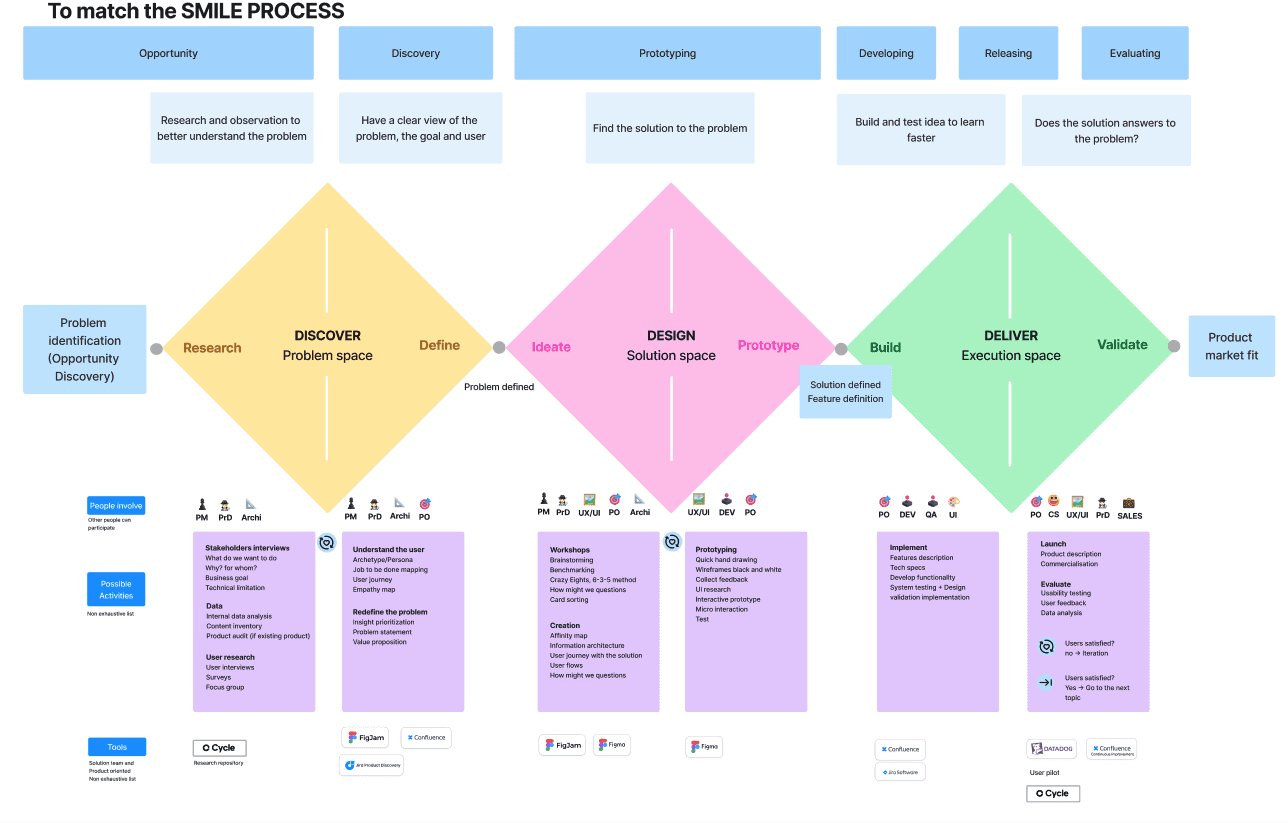
1. Start With a Shared Process (Not a Perfect One)
You don’t need an overly complex framework. You need a visible, shared rhythm.
A simple structure that works in most organizations:
🔁 Discover → Define → Design → Deliver → Learn
What matters:
Everyone knows where you are in the cycle
Everyone understands what’s expected at each phase
Outputs are explicit (research insights, problem statements, prototypes, decisions)
Lead Designer Tip
Document this flow once. Reuse it everywhere: onboarding, kickoffs, workshops, retros.
Consistency builds speed.
2. Design Is a Team Sport (So Invite People Early)
One of the biggest workflow killers is late involvement.
Instead, pull cross-functional partners in from day one:
Product → problem framing & prioritization
Engineering → feasibility & technical constraints
Business → impact & success metrics
Run short collaborative sessions:
Problem framing workshops
Assumption mapping
Rapid ideation
Concept reviews
This creates:
✅ Shared ownership
✅ Fewer surprises
✅ Faster decisions
✅ Better solutions
3. Centralize Knowledge or Lose It
Insights scattered across tools = wasted intelligence.
High-performing teams centralize:
User research
Decisions
Design rationale
Experiments
Outcomes
Tools like Figma, Confluence, and Dovetail work best when used intentionally — not as dumping grounds.
Your job as Lead Designer is to define:
Where insights live
How they’re tagged
How they’re reused
Who maintains them
Think design memory, not documentation.
4. Establish simple rituals:
Clarity beats creativity when it comes to team communication.
Weekly
Design sync
Product alignment
Engineering touchpoint
Per project
Kickoff
Mid-review
Final review
And standardize:
Design review templates
Feedback formats
Decision logs
This removes friction and emotional overhead.
Golden rule
If someone asks the same question multiple times, it's probably a sign that your system has failed, rather than the person. Review your process again.


5. From Designer to Design Leader
At Lead level, your impact comes from leverage:
You don’t just design screens.
You design systems.
That means:
Coaching designers
Facilitating alignment
Protecting focus
Translating between disciplines
Creating space for deep work
Helping others succeed
Your success metric shifts from what you ship to how the team ships.
6. Measure What Actually Matters
Move beyond delivery metrics.
Track:
Time from idea → validation
Rework rate
Stakeholder confidence
Research reuse
Team satisfaction
Decision velocity
These reveal the health of your workflow far better than ticket counts.
Final Thought
Streamlining design workflow isn’t about doing more.
It’s about removing friction.
When process is clear, collaboration is natural, and communication is intentional, teams move faster, products improve, and people feel proud of their work.
That’s real design leadership.
More to Discover

How to Streamline the Design Process
Discover practical strategies to move faster, without burning teams, by building clarity, trust, and shared ownership.
Resources
Sep 27, 2025
Why Design Workflow Matters More Than Ever
Today’s product teams are under constant pressure: ship faster, validate earlier, collaborate deeper, and still deliver quality experiences.
As a Lead Product Designer, your role goes far beyond pixels. You orchestrate:
Process
People
Communication
Decision-making
A strong design workflow isn’t about rigid frameworks — it’s about creating alignment, momentum, and psychological safety across designers, product managers, engineers, and stakeholders.
Let’s break down a practical, real-world approach.
1. Start With a Shared Process (Not a Perfect One)
You don’t need an overly complex framework. You need a visible, shared rhythm.
A simple structure that works in most organizations:
🔁 Discover → Define → Design → Deliver → Learn
What matters:
Everyone knows where you are in the cycle
Everyone understands what’s expected at each phase
Outputs are explicit (research insights, problem statements, prototypes, decisions)
Lead Designer Tip
Document this flow once. Reuse it everywhere: onboarding, kickoffs, workshops, retros.
Consistency builds speed.
2. Design Is a Team Sport (So Invite People Early)
One of the biggest workflow killers is late involvement.
Instead, pull cross-functional partners in from day one:
Product → problem framing & prioritization
Engineering → feasibility & technical constraints
Business → impact & success metrics
Run short collaborative sessions:
Problem framing workshops
Assumption mapping
Rapid ideation
Concept reviews
This creates:
✅ Shared ownership
✅ Fewer surprises
✅ Faster decisions
✅ Better solutions
3. Centralize Knowledge or Lose It
Insights scattered across tools = wasted intelligence.
High-performing teams centralize:
User research
Decisions
Design rationale
Experiments
Outcomes
Tools like Figma, Confluence, and Dovetail work best when used intentionally — not as dumping grounds.
Your job as Lead Designer is to define:
Where insights live
How they’re tagged
How they’re reused
Who maintains them
Think design memory, not documentation.
4. Establish simple rituals:
Clarity beats creativity when it comes to team communication.
Weekly
Design sync
Product alignment
Engineering touchpoint
Per project
Kickoff
Mid-review
Final review
And standardize:
Design review templates
Feedback formats
Decision logs
This removes friction and emotional overhead.
Golden rule
If someone asks the same question multiple times, it's probably a sign that your system has failed, rather than the person. Review your process again.
5. From Designer to Design Leader
At Lead level, your impact comes from leverage:
You don’t just design screens.
You design systems.
That means:
Coaching designers
Facilitating alignment
Protecting focus
Translating between disciplines
Creating space for deep work
Helping others succeed
Your success metric shifts from what you ship to how the team ships.
6. Measure What Actually Matters
Move beyond delivery metrics.
Track:
Time from idea → validation
Rework rate
Stakeholder confidence
Research reuse
Team satisfaction
Decision velocity
These reveal the health of your workflow far better than ticket counts.
Final Thought
Streamlining design workflow isn’t about doing more.
It’s about removing friction.
When process is clear, collaboration is natural, and communication is intentional, teams move faster, products improve, and people feel proud of their work.
That’s real design leadership.
More to Discover
How to Streamline the Design Process
Discover practical strategies to move faster, without burning teams, by building clarity, trust, and shared ownership.
Resources
Sep 27, 2025
Why Design Workflow Matters More Than Ever
Today’s product teams are under constant pressure: ship faster, validate earlier, collaborate deeper, and still deliver quality experiences.
As a Lead Product Designer, your role goes far beyond pixels. You orchestrate:
Process
People
Communication
Decision-making
A strong design workflow isn’t about rigid frameworks — it’s about creating alignment, momentum, and psychological safety across designers, product managers, engineers, and stakeholders.
Let’s break down a practical, real-world approach.
1. Start With a Shared Process (Not a Perfect One)
You don’t need an overly complex framework. You need a visible, shared rhythm.
A simple structure that works in most organizations:
🔁 Discover → Define → Design → Deliver → Learn
What matters:
Everyone knows where you are in the cycle
Everyone understands what’s expected at each phase
Outputs are explicit (research insights, problem statements, prototypes, decisions)
Lead Designer Tip
Document this flow once. Reuse it everywhere: onboarding, kickoffs, workshops, retros.
Consistency builds speed.
2. Design Is a Team Sport (So Invite People Early)
One of the biggest workflow killers is late involvement.
Instead, pull cross-functional partners in from day one:
Product → problem framing & prioritization
Engineering → feasibility & technical constraints
Business → impact & success metrics
Run short collaborative sessions:
Problem framing workshops
Assumption mapping
Rapid ideation
Concept reviews
This creates:
✅ Shared ownership
✅ Fewer surprises
✅ Faster decisions
✅ Better solutions
3. Centralize Knowledge or Lose It
Insights scattered across tools = wasted intelligence.
High-performing teams centralize:
User research
Decisions
Design rationale
Experiments
Outcomes
Tools like Figma, Confluence, and Dovetail work best when used intentionally — not as dumping grounds.
Your job as Lead Designer is to define:
Where insights live
How they’re tagged
How they’re reused
Who maintains them
Think design memory, not documentation.
4. Establish simple rituals:
Clarity beats creativity when it comes to team communication.
Weekly
Design sync
Product alignment
Engineering touchpoint
Per project
Kickoff
Mid-review
Final review
And standardize:
Design review templates
Feedback formats
Decision logs
This removes friction and emotional overhead.
Golden rule
If someone asks the same question multiple times, it's probably a sign that your system has failed, rather than the person. Review your process again.
5. From Designer to Design Leader
At Lead level, your impact comes from leverage:
You don’t just design screens.
You design systems.
That means:
Coaching designers
Facilitating alignment
Protecting focus
Translating between disciplines
Creating space for deep work
Helping others succeed
Your success metric shifts from what you ship to how the team ships.
6. Measure What Actually Matters
Move beyond delivery metrics.
Track:
Time from idea → validation
Rework rate
Stakeholder confidence
Research reuse
Team satisfaction
Decision velocity
These reveal the health of your workflow far better than ticket counts.
Final Thought
Streamlining design workflow isn’t about doing more.
It’s about removing friction.
When process is clear, collaboration is natural, and communication is intentional, teams move faster, products improve, and people feel proud of their work.
That’s real design leadership.